
Modular Sunroom Systems Supplier Quotation Guide
Start With the Right Procurement Specification
Buyers sourcing modular sunroom systems need more than an attractive rendering or a low square-meter price. The system must balance daylight, weather protection, structural stability, installation efficiency, export packaging, and long-term service. Modular construction can simplify production and site assembly through repeatable frames, connectors, glazing panels, and roof components, but the final result depends on the engineering and detailing behind those parts.
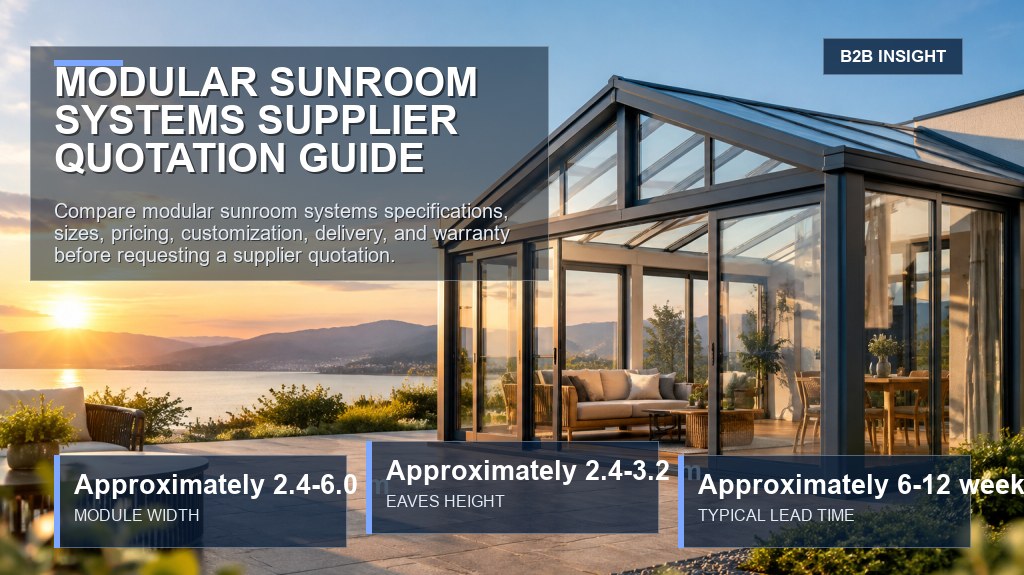
For preliminary budgeting, useful industry reference ranges may include a module width of approximately 2.4–6.0 m, an eaves height of approximately 2.4–3.2 m, and a typical lead time of approximately 6–12 weeks. These are indicative procurement benchmarks, not certified specifications or delivery guarantees. Confirm the applicable values in the supplier’s datasheet, engineering review, and formal quotation.
Compare Sizes, Materials, and Configuration
Begin with the footprint, overall height, roof geometry, door and window positions, and the method used to connect modules. Then review frame material and section design, surface treatment, glazing thickness and type, hardware, seals, drainage, ventilation, and shading provisions. Buyers serving hot, cold, humid, or high-wind markets should request the supplier’s design assumptions and clarify which conditions require project-specific engineering.
A capable modular sunroom systems manufacturer should explain how standard modules can be combined, shortened, extended, or adapted to a project layout. Confirm permitted tolerances, foundation interfaces, floor levels, accessibility requirements, colors, opening directions, and optional accessories before comparing prices. Customization is easier to control when the supplier separates standard components from engineered or non-standard items.
Evaluate the Quotation and Supplier
A useful modular sunroom systems supplier quotation should identify the frame, glazing, roof, doors, hardware, packaging, spare parts, installation guidance, transport assumptions, and any taxes or local charges. Ask whether the price is based on area, complete modules, or a project bill of materials. This prevents an apparently low factory-direct price from excluding essential components or site requirements.
Supplier selection should cover manufacturing consistency, OEM capability, drawing support, quality inspection, container loading efficiency, and after-sales communication. Request assembly drawings, connection details, material lists, maintenance instructions, and a clear revision process. For repeat orders, confirm minimum order quantity, sample arrangements, production capacity, replacement-part availability, and payment milestones.
Warranty terms should distinguish the frame, glazing, hardware, and seals rather than using one broad statement. Review coverage period, exclusions, evidence required for a claim, and the process for replacement parts. If the project requires local building approval or performance documentation, ask what technical files the factory can provide, while keeping final compliance and approval responsibilities with the project owner and relevant local professionals.
Prepare a Complete RFQ
Send the supplier a plan or sketch, target dimensions, quantity, installation country, climate exposure, glazing preference, color, packaging requirement, and preferred Incoterm. Include site access constraints and whether installation support is required. This allows the manufacturer to calculate components, packing volume, engineering effort, and delivery more accurately.
Ask each shortlisted factory to return the modular sunroom systems specifications, itemized price, total quotation, production schedule, packing details, warranty terms, spare-parts policy, and customization charges. Comparing complete technical and commercial responses is more reliable than comparing headline prices alone. A concise RFQ with project drawings and purchasing quantities is the fastest route to an actionable quotation.
Procurement Metrics to Confirm
| Metric | Value | Buying Reference |
|---|---|---|
| MODULE WIDTH | Approximately 2.4–6.0 m | Indicative modular planning benchmark; confirm project design. |
| EAVES HEIGHT | Approximately 2.4–3.2 m | Common preliminary sizing range; verify supplier drawings. |
| TYPICAL LEAD TIME | Approximately 6–12 weeks | Indicative production range excluding approval and shipping. |
These are indicative procurement benchmarks; confirm final figures in the supplier datasheet and formal quotation.