
Aluminum Insulated Panels Supplier Quotation Guide
Define the Requirement Before Requesting a Quote
An aluminum insulated panels supplier quotation is useful only when its technical and commercial scope is clear. Buyers should identify whether the panels are intended for walls, roofs or another enclosure application. The inquiry should state the required core material, aluminum skin grade and thickness, coating or finish, joint profile, seal arrangement, project drawings and applicable performance requirements.
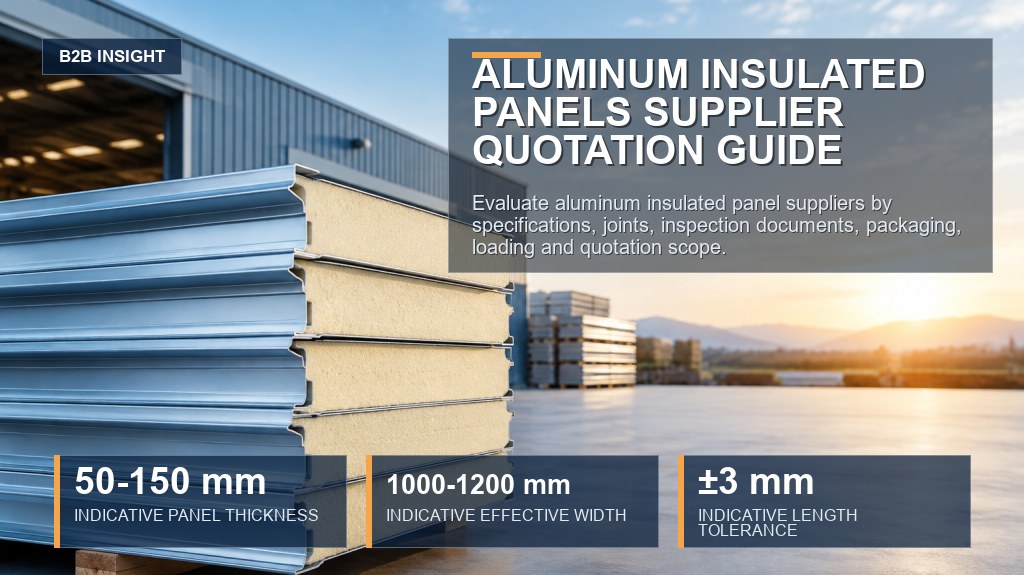
For initial supplier screening, buyers may use 50–150 mm panel thickness, 1000–1200 mm effective width and ±3 mm length tolerance as indicative procurement benchmarks. These figures are not confirmed Zhending specifications or certified performance values. They must be checked against the supplier’s current datasheet, approved drawing, sample and quotation.
Compare Product Scope, Not Unit Price Alone
Whether sourcing from an aluminum sandwich panel manufacturer or a trading supplier, compare what is included. A low aluminum insulated panel price may exclude protective film, compatible fasteners, seals, edge treatment, special finishes, crates or inspection documents. Buyers of insulated aluminum wall panels should focus on joint geometry, flatness, surface consistency and compatibility with the intended supporting structure. For aluminum roof sandwich panels, water-management details, overlaps, fastener locations and seal interfaces require particular attention.
| Decision Area | Supplier Evidence | Risk-Control Action |
|---|---|---|
| Panel construction | Skin, core, dimensions and finish | Approve a written specification |
| Joint system | Profile, fasteners and seals | Review installation drawings |
| Quality control | Dimensional and visual records | Define acceptance criteria |
| Export delivery | Protection, crates and loading plan | Approve packaging before dispatch |
For custom aluminum insulated panels, request drawings that identify tolerances, cutouts, edge details and finish references. Samples can support visual and dimensional review, but production acceptance criteria should still be documented.
Evaluate Supplier Reliability and Documentation
Zhending has 10 years of offline brick-and-mortar operating experience and 1 year of online sales experience. This background provides context about its commercial history, but it is not a guarantee of panel performance, delivery results or project suitability.
Before ordering, request a formal quotation, technical datasheet, material and finish description, approved drawings, dimensional inspection format, packing proposal and container-loading plan. Any material grade, coating system, fire behavior, thermal value, weather resistance, warranty, certification or delivery schedule should remain unconfirmed until it appears in supplier-issued documents applicable to the proposed order.
Control Packaging and Shipment Risk
Building-envelope panels can be damaged by abrasion, edge impact, moisture or poorly distributed loading. Confirm protective film, interlayer material, corner guards, moisture barriers, pallet or crate design, lifting instructions and stacking limits. The buyer should also check package dimensions, gross weight, container utilization and unloading method. Pre-dispatch photos and packing records can help verify that the agreed protection method was followed without replacing a contractual inspection process.
Representative Procurement Case and Inquiry
A representative case from Germany involves a building-envelope materials distributor evaluating an export supplier. Its main concerns were dimensional consistency, surface protection and joint compatibility. The buyer reviewed specifications and packaging details first, then compared samples and commercial terms. General feedback indicated that clearly separated confirmed specifications and pending items made internal approval easier. This is a representative procurement scenario, not a verified named testimonial or guaranteed outcome.
For a focused evaluation, send Zhending the application, drawings, target dimensions, finish requirements, quantity range, destination port and requested trade terms. Ask the supplier to identify confirmed capabilities, exclusions, optional items and points requiring technical review before issuing the final quotation.