
Aluminum Insulated Panel Thickness Differences: Key Parameters & Performance Comparisons
When choosing aluminum insulated panels for roofing, wall cladding, and building insulation projects, panel thickness is one of the most critical factors that directly determine thermal insulation efficiency, structural strength, load-bearing capacity, and overall application performance.
From thin 20mm lightweight panels to thick 100mm heavy-duty insulation boards, different thicknesses correspond to distinct technical parameters and application scenarios.
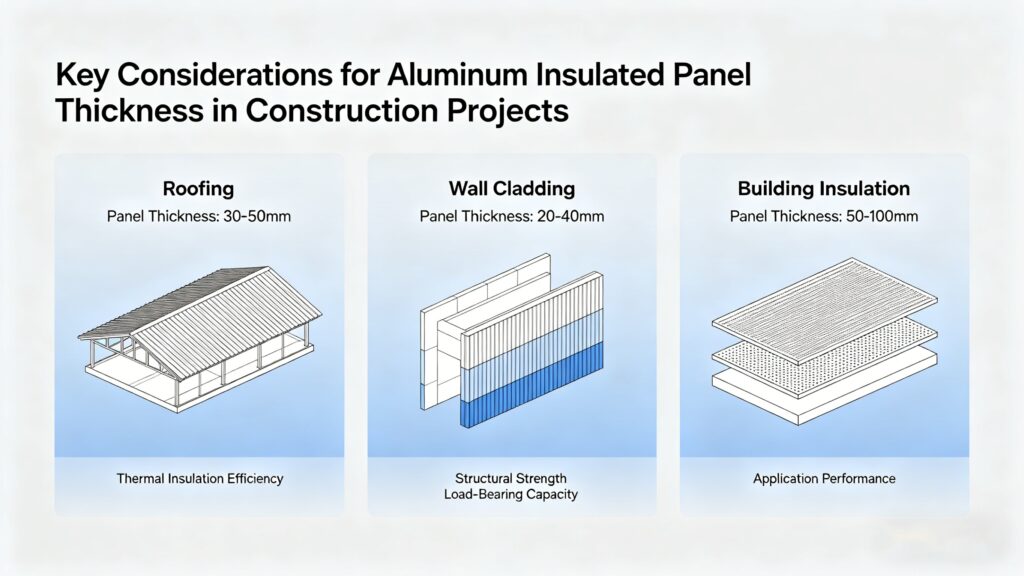
This article breaks down the core differences between thin and thick aluminum insulated panels, lists professional performance parameters, and helps you select the most suitable thickness for your project.
Core Technical Parameters of Aluminum Insulated Panels by Thickness
Aluminum insulated panels are composed of high-strength aluminum alloy sheets on both sides and a dense thermal insulation core material in the middle, and their performance parameters change regularly with thickness. The following are the standard thickness specifications and corresponding key parameters commonly available in the industry:
1. Thin Aluminum Insulated Panels (20mm – 40mm)
- Thermal Conductivity: 0.028 – 0.032 W/(m·K)
- Surface Load-Bearing Capacity: 1.2 – 1.8 kN/㎡
- Temperature Insulation Difference: 4 – 6℃ (outdoor 38℃/100.4°F environment)
- Unit Weight: 2.5 – 3.5 kg/㎡
- Compressive Strength: ≥150 kPa
2. Medium-Thickness Aluminum Insulated Panels (50mm – 75mm)
- Thermal Conductivity: 0.024 – 0.028 W/(m·K)
- Surface Load-Bearing Capacity: 2.0 – 3.0 kN/㎡
- Temperature Insulation Difference: 7 – 10℃ (outdoor 38℃/100.4°F environment)
- Unit Weight: 4.0 – 5.5 kg/㎡
- Compressive Strength: ≥220 kPa
3. Thick Aluminum Insulated Panels (80mm – 100mm)
- Thermal Conductivity: 0.022 – 0.024 W/(m·K)
- Surface Load-Bearing Capacity: 3.2 – 4.5 kN/㎡
- Temperature Insulation Difference: 10 – 13℃ (outdoor 38℃/100.4°F environment)
- Unit Weight: 6.0 – 7.5 kg/㎡
- Compressive Strength: ≥300 kPa
Key Differences Between Thin and Thick Aluminum Insulated Panels
Thermal Insulation Performance
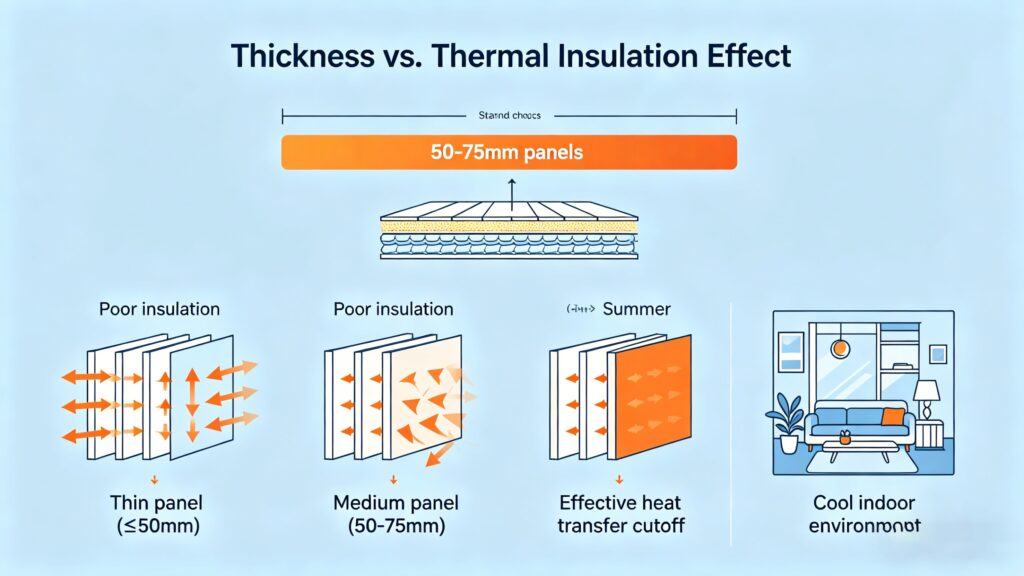
Thickness is directly proportional to thermal insulation effect. Thin 20-40mm panels can meet basic daily insulation needs, blocking part of solar radiation and heat conduction, but cannot cope with long-term high-temperature exposure. Medium 50-75mm panels are the mainstream choice, with a denser insulation core that effectively cuts off heat transfer, keeping indoor spaces cool for a long time in hot summers. Thick 80-100mm panels have optimal thermal insulation performance, with ultra-low thermal conductivity, making them ideal for tropical, desert, and high-temperature industrial areas, greatly reducing air conditioning energy consumption.
Structural Strength & Durability
Thin aluminum insulated panels are lightweight and flexible, but have lower compressive and wind-resistant performance, making them only suitable for low-load indoor partitions, temporary buildings, or auxiliary insulation. Medium-thickness panels balance weight and strength, with strong resistance to wind pressure, snow load, and minor impacts, suitable for most residential, commercial, and factory buildings. Thick panels feature higher rigidity and compressive strength, no deformation under long-term use, strong resistance to extreme weather, and a longer service life, reaching more than 30 years.
Application Scope
- Thin panels (20-40mm): Suitable for interior decoration, mobile houses, temporary sheds, small storage rooms, and buildings in mild temperature regions.
- Medium-thickness panels (50-75mm): Suitable for residential roofs, sunrooms, office buildings, conventional factories, and warehouses in areas with hot summers and cold winters.
- Thick panels (80-100mm): Suitable for large industrial workshops, logistics warehouses, tropical building projects, constant temperature workshops, and buildings requiring high-performance thermal insulation.
Cost & Installation Efficiency
Thin panels have lower material costs, are lighter in weight, and are faster to install, with lower labor costs, suitable for small projects with limited budgets. Medium-thickness panels offer the highest cost performance, taking into account insulation, strength, and cost, meeting the needs of most engineering projects. Thick panels have higher material costs, are slightly heavier, but deliver long-term energy-saving benefits that offset early investment, suitable for high-standard long-term construction projects.
How to Choose the Right Thickness of Aluminum Insulated Panels
- Determine according to regional climate: Choose thick panels for high-temperature, cold, or extreme weather areas, and thin/medium panels for mild climate regions.
- Select based on building use: Opt for thick panels for industrial and constant-temperature buildings, and medium panels for residential and commercial buildings.
- Match with load-bearing requirements: Prioritize medium and thick panels for buildings with high wind and snow load demands.
- Consider budget and energy-saving goals: Pursue long-term energy savings with thick panels, and control early costs with thin/medium panels.
Conclusion
The thickness of aluminum insulated panels directly determines thermal insulation efficiency, structural performance, and application scenarios. Thin panels are lightweight and economical, medium panels are cost-effective and versatile, and thick panels deliver high-performance insulation and durability. With clear performance parameters and targeted advantages, aluminum insulated panels can meet the needs of various construction projects.
Our factory has a wealth of customized solutions to provide you with professional roof and wall insulation design and panel selection services.