Aluminum Insulated Roof Panels: Thickness & Roof Slope for No Water Ponding in Heavy Rain
When installing aluminum insulated panels for roofing,
two factors directly determine whether your roof stays dry and free of ponding during heavy downpours: the thickness of the aluminum insulated panel and the roof slope (angle).
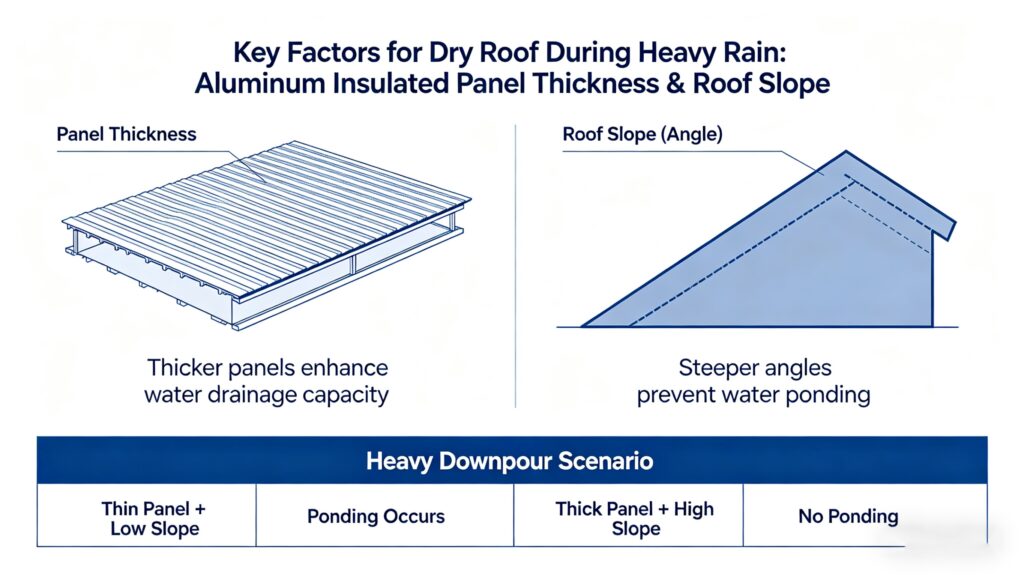
Choosing the right specifications ensures efficient drainage, prevents water buildup, and extends the life of your roof.
In this article, we explain the ideal panel thickness and roof angle to avoid ponding even in extreme rainy weather.
Ideal Thickness of Aluminum Insulated Panels for Roof Drainage
The thickness of aluminum insulated panels affects structural rigidity, load resistance, and how well the roof maintains its shape under rain and weight.
For most residential, factory, and sunroom roofs:
- 40mm to 80mm thick aluminum insulated panels are the most practical choice.
- In areas with heavy rainfall or occasional snow, 80mm to 100mm thick panels are recommended for better stiffness.
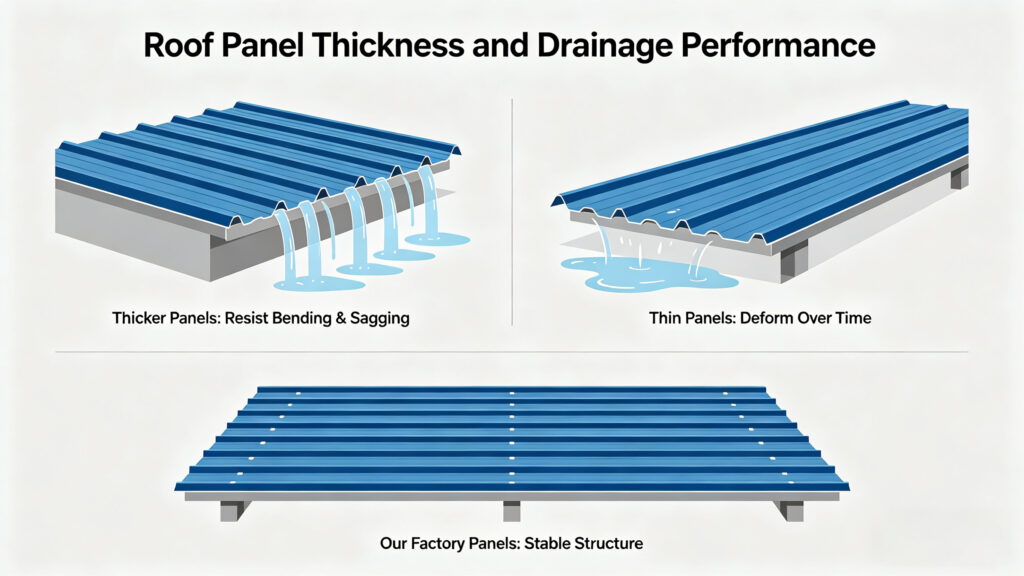
Thicker panels resist bending and sagging, which is the main cause of roof ponding. A panel that is too thin may deform over time, creating low spots where water collects.
Our factory produces panels with stable structural performance, so they stay flat and maintain consistent drainage even after long-term use.
Recommended Roof Slope (Angle) to Prevent Water Ponding
Roof slope or tilt angle is the most critical factor for fast rainwater drainage. A flat or too-shallow roof easily holds water, leading to leaks and material damage.
For aluminum insulated panel roofs:
- The minimum recommended roof slope is 5% (about 2.86 degrees).
- For areas with frequent heavy rain or typhoons, a slope of 10% to 15% (about 5.7 to 8.5 degrees) works best.
- In regions with extremely heavy rainfall, a slope above 15 degrees ensures the fastest runoff.
A proper slope allows rainwater to flow directly into gutters without lingering on the panel surface.
Combined with high-quality aluminum surface and tight overlapping design, water simply slides off without penetrating or accumulating.
Why Proper Thickness & Slope Protect Your Roof
- Prevents permanent water stains, mold, and corrosion on aluminum surfaces.
- Avoids structural stress caused by standing water weight.
- Reduces the risk of leaks at joints and flashing areas.
- Extends the overall service life of the roofing system.
Conclusion
To keep your roof free of ponding during heavy rain, choose 40mm–100mm aluminum insulated panels and a roof slope of at least 5% (≈2.86°). Higher slopes are better for rainy regions, while thicker panels add strength and stability.
Our factory has a wide range of solutions available to help you design the perfect roof for your building.