
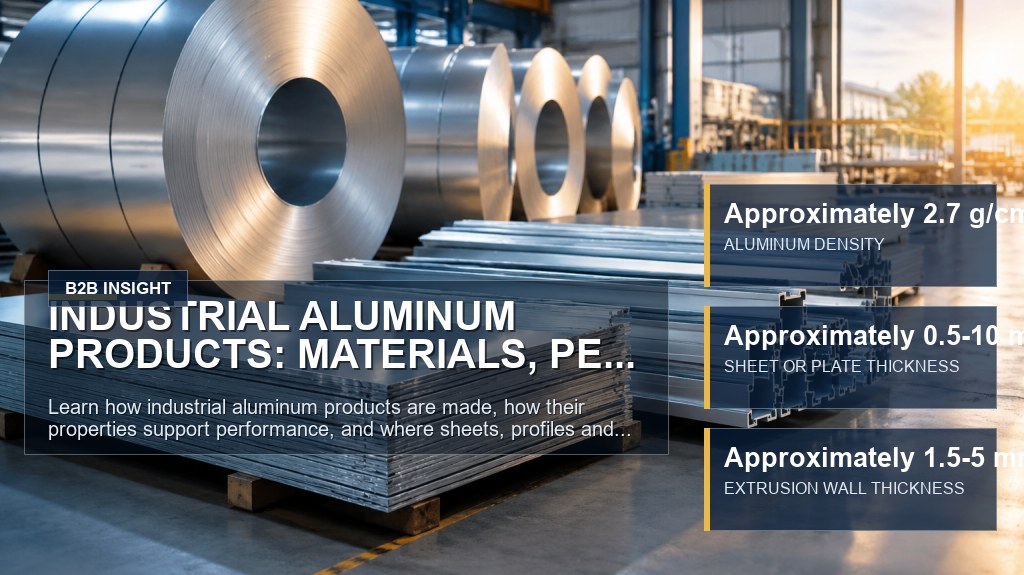
Industrial Aluminum Products: Materials, Performance and Uses
Industrial aluminum products include sheets, coils, profiles, panels, trims and fabricated components used in construction, equipment and project-based manufacturing. Their value comes from a useful balance of low weight, corrosion resistance, formability and functional surface options. The right product depends on the required geometry, environment, load, finish and installation method.
What Industrial Aluminum Products Include
Industrial aluminum products are supplied in several forms. Flat products such as sheet and coil are used for covers, cladding, flashing, interior surfaces and fabricated enclosures. Extruded profiles are shaped through a die to create channels, frames, rails, tracks and structural sections. Aluminum panels and composite components support wall, roof, ceiling and equipment applications where a clean surface and controlled appearance are important.
Fabrication may include cutting, bending, punching, drilling, joining and surface treatment. Product drawings should define dimensions, tolerances, edge details, hole positions and connection methods before production. These details affect installation accuracy and the final performance of the assembled component.
Material Characteristics and Performance
Aluminum has a relatively low density compared with many common structural metals, helping reduce handling weight and simplify installation. It also forms a naturally protective oxide layer when exposed to air. This supports corrosion resistance, although the final choice must still consider moisture, salt exposure, chemicals, contact with dissimilar metals and the required surface finish.
Formability is another important characteristic. Depending on the selected alloy, temper and product shape, aluminum can be rolled, bent, extruded or machined into detailed components. Surface treatments such as anodizing, powder coating or paint systems may be selected for appearance, wear resistance or added environmental protection. Coating specifications should be confirmed for each project rather than assumed from the product name.
Aluminum also conducts heat and electricity, which can be useful in selected equipment applications but requires attention to thermal bridging in building envelopes. Where insulation is needed, aluminum skins may be combined with insulation cores or installed as part of a layered enclosure system.
Common Industrial and Building Applications
- Building envelopes: cladding, roof edges, wall panels, trims, louvers and weather-resistant details.
- Modular construction: frames, partitions, sunroom components and lightweight connection systems.
- Equipment enclosures: covers, access panels, guards and cabinets that require manageable weight and a finished appearance.
- Transport and general fabrication: formed panels, brackets and profiles where corrosion resistance and ease of processing are relevant.
- Project components: customized sections designed around site dimensions, installation sequences and architectural requirements.
For insulated construction, aluminum surfaces can be used with core materials selected for thermal, acoustic or fire-related project requirements. Color-coated steel rock wool and polyurethane sandwich panels are a separate enclosure category, but they may be considered alongside aluminum components when a project requires insulated wall or roof assemblies.
How to Select the Appropriate Product
Start with the application environment and the required function. Confirm whether the component is decorative, protective, load-supporting, insulating or primarily used for assembly. Then review thickness, profile geometry, alloy and temper, surface finish, dimensions, joining method and packaging requirements.
For export projects, technical drawings and a concise specification sheet help align the buyer, fabricator and installer. Any requested color, coating, cut length, perforation or formed shape should be listed clearly. Supplier quotations should be based on the confirmed product form and processing scope, because these factors can change the final specification and cost.
Working with a Product Supplier
Zhending Aluminum — a major aluminum products supplier from China. ZHENDING supplies aluminum insulated panels, modular sunroom systems, and outdoor building components for residential, commercial, and project applications, including the Color-Coated Steel Rock Wool / Polyurethane Sandwich Panel Series. For a project inquiry, provide drawings, target dimensions, application conditions and preferred finish so the product scope can be reviewed efficiently.
Industrial aluminum products are most effective when material selection, fabrication details and installation conditions are considered together. Contact a qualified supplier with the required dimensions and application information to develop a suitable product specification.
Product Reference Indicators
| Metric | Value | Context |
|---|---|---|
| ALUMINUM DENSITY | Approximately 2.7 g/cm3 | Commonly published indicative material reference; confirm the applicable alloy and product specification. |
| SHEET OR PLATE THICKNESS | Approximately 0.5-10 mm | Commonly published indicative range across industrial aluminum sheet and plate products; confirm the required product form. |
| EXTRUSION WALL THICKNESS | Approximately 1.5-5 mm | Commonly published indicative range for selected aluminum extrusion profiles; confirm geometry, alloy and manufacturing capability. |
Where the source material provides no confirmed value, these figures illustrate product-selection dimensions and should be read with the applicable product datasheet.