
OEM Modular Sunroom Systems Manufacturer: Buyer’s Guide
Define the Project Before Comparing Sunroom Systems
Selecting an OEM modular sunroom systems manufacturer should begin with the project conditions, not a generic price per square meter. Buyers need to define the external dimensions, roof geometry, installation environment, preferred frame material, glazing configuration, opening panels, drainage requirements, and destination. Wind, snow, thermal, and building-code requirements must also be communicated because they can materially change the structure and cost.
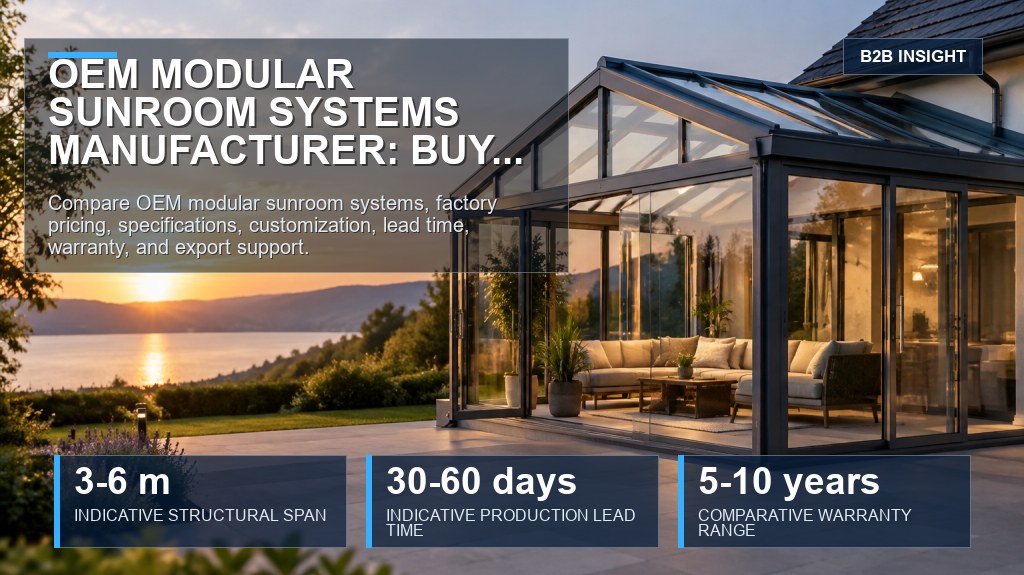
The most common sourcing problems include mismatched connection points, incomplete hardware, difficult site assembly, inadequate waterproofing details, transit damage, and drawings that do not reflect the delivered components. A modular design can reduce site work, but only when the factory coordinates frame modules, glazing sizes, seals, fasteners, doors, and interfaces as one system. For preliminary comparison, buyers may review a typical structural span benchmark of 3-6 m. This is an indicative procurement range rather than a certified capability; the final span must be confirmed through the supplier’s engineering review, drawings, and quotation.
Compare Specifications and Factory-Direct Pricing
A useful quotation should describe what is included rather than presenting one unexplained total. Ask the supplier to separate the frame, glazing, doors and windows, drainage components, seals, fasteners, surface treatment, accessories, export packaging, and freight terms. Tooling, engineering, samples, installation supervision, and replacement parts should also be identified where applicable.
Technical comparison should cover frame alloy or steel grade, profile dimensions, wall thickness, reinforcement, connection method, finish, glass type, panel thickness, opening hardware, water-management details, and allowable customization. Buyers should confirm whether the system is supplied as fully prepared modules, cut-to-size components, or longer profiles requiring substantial fabrication at the destination. These formats have different labor, packaging, container utilization, and installation implications.
A factory-direct price is meaningful only when competing offers use the same dimensions, materials, scope, Incoterm, and performance assumptions. A lower quote may exclude glass, structural reinforcement, installation hardware, protective packaging, or destination-specific documentation. Request a bill of materials and approved drawings so that cost differences can be traced to actual specifications instead of vague quality grades.
Evaluate OEM Production, Delivery, and Warranty
OEM capability may include custom dimensions, roof styles, frame colors, glazing combinations, branded packaging, manuals, labels, and distributor-specific accessories. Before approving production, verify the manufacturer’s drawing-review process, prototype or trial-assembly options, incoming material controls, in-process inspection, and final packing checklist. Photos or records of trial assembly can help identify missing parts and alignment issues before shipment without replacing an independent inspection where one is required.
For planning purposes, 30-60 days can be used as an indicative lead-time benchmark for customized orders. Actual timing depends on engineering approval, material availability, finish selection, order volume, glazing procurement, and factory capacity. The quotation should state when lead time begins, such as after deposit receipt and drawing approval, and whether holidays or third-party processing affect the schedule.
A comparative warranty benchmark of 5-10 years may be considered for specified structural or surface-treatment elements, but it must not be assumed to cover the entire sunroom. Buyers should request written terms identifying covered components, exclusions, claim procedures, replacement-part responsibility, freight allocation, and required maintenance. Hardware, seals, glass, coatings, and electrical accessories may have different coverage. Both lead time and warranty figures are indicative only and must be confirmed in the manufacturer’s datasheet, quotation, and contract.
Send a Complete Inquiry for a Comparable Quotation
A professional inquiry should include dimensioned drawings, project quantity, installation location, intended use, roof style, frame preference, glass requirements, colors, opening sections, drainage expectations, destination port, and required delivery date. If local structural criteria apply, provide the relevant design loads or request the supplier to list the information needed for engineering review.
Ask each prospective manufacturer to quote unit price, total system scope, minimum order quantity, tooling or design charges, sample policy, production schedule, packaging method, container-loading plan, payment terms, warranty boundaries, and spare-parts availability. Also request assembly drawings, installation guidance, packing lists, and a clear revision process for customized designs.
To receive a practical factory quotation, send the same project brief to shortlisted suppliers and require them to declare exclusions and assumptions. This solution-first approach makes OEM modular sunroom systems easier to compare and reduces the commercial risk of choosing an apparently low price that does not include a complete, installable system.