
How Winter Sales of Insulated Aluminum Roof Panels Affect Summer Demand in Turkey
Turkey features distinct four seasons, and insulated aluminum roof panels deliver dual performance: keeping interiors cool in hot summers and retaining warmth in cold winters.
Many suppliers, distributors and local contractors wonder: How do winter sales volumes affect the summer market for insulated aluminum roof panels across Turkey?
Understanding the link between winter business and peak summer demand helps you plan inventory, marketing campaigns and pricing strategies reasonably.
This article analyzes market rules, customer behavior and sales changes between winter and summer in Turkey.
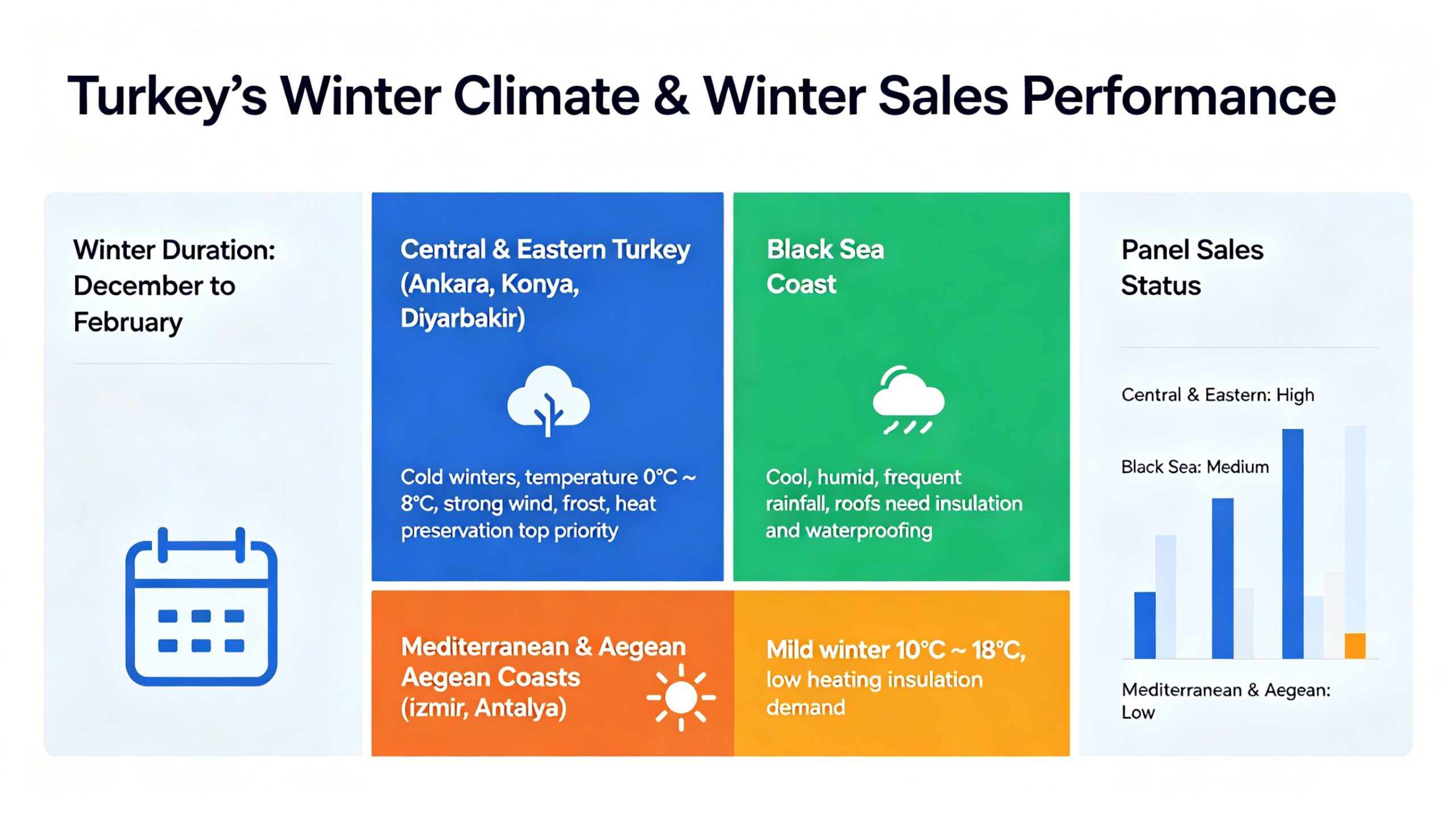
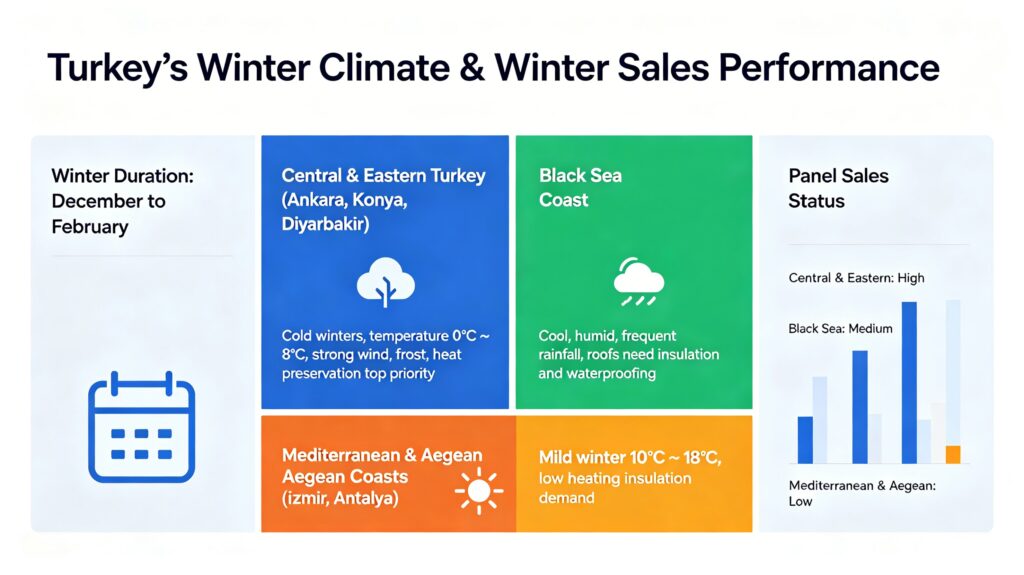
Turkey’s Winter Climate & Winter Sales Performance
First, let’s review Turkey’s winter conditions and corresponding panel sales status.
Winter lasts from December to February. Climate varies obviously across different areas:
- Central & Eastern Turkey (Ankara, Konya, Diyarbakır): Cold winters, temperature often drops to 0°C ~ 8°C. Strong wind and frost make heat preservation a top priority.
- Black Sea Coast: Cool and humid, frequent rainfall; roofs need both insulation and waterproofing.
- Mediterranean & Aegean Coasts (İzmir, Antalya): Mild winter around 10°C ~ 18°C, low demand for heating insulation.
General Winter Sales Features
- Overall sales volume declines Compared with summer, winter is traditionally the off-season for insulated roof panels in Turkey. Most homeowners and shop owners delay roof renovation projects, as cold weather slows down construction and installation work.
- Sales focus shifts to heat retention Buyers in cold inland areas mainly purchase panels for heat insulation, to stop indoor heat from escaping through traditional metal roofs. Panels with 75mm and 100mm thick insulation cores are more popular here.
- Stable bulk orders from industrial projects While retail sales slow, factories, warehouses and large construction projects maintain steady bulk purchases all winter long. These long-term orders support basic sales volume in the off-season.
The Connection: How Winter Sales Influence Summer Market
Winter market performance directly shapes inventory, customer base and sales momentum for the upcoming summer peak season. We divide the impact into three core aspects.
1. Inventory & Supply Chain Adjustment
- Strong winter sales: If panels sell well in winter, distributors will keep sufficient stock and stable supply chains. When summer heat arrives suddenly, they can meet surging orders immediately, avoid stock shortages and seize more market share.
- Weak winter sales: Excess inventory piles up in warehouses. Many sellers choose to launch discount promotions in early summer to clear stock, which will affect overall profit margins for the peak season.
2. Customer Recognition & Word-of-Mouth Spread
Insulated aluminum panels work well for both heat preservation and cooling.
- Customers who install panels in winter experience obvious warmth and lower heating costs. When summer comes, they will personally feel the cooling effect and recommend the products to neighbors, friends and business partners. This forms free word-of-mouth promotion and drives more retail orders.
- Contractors and builders who cooperate steadily in winter will continue long-term partnerships in summer, bringing continuous B2B orders.
3. Market Price & Competition Trend
- With decent winter sales, brands and distributors maintain stable pricing. The market stays orderly when summer demand explodes.
- If most sellers face poor winter sales, fierce price wars will break out in early summer. Competing merchants cut prices sharply to attract buyers, compressing profit space for the whole industry.
Seasonal Sales Volume Comparison: Winter VS Summer in Turkey
| Period | Main Demand Reason | Hot Selling Regions | Sales Level | Popular Panel Thickness |
|---|---|---|---|---|
| Winter | Heat preservation, windproof, anti-condensation | Central, Eastern Turkey, Black Sea Coast | Medium (Off-season) | 75mm / 100mm |
| Summer | Heat insulation, reduce AC cost, cool indoor space | Mediterranean, Aegean, Central Turkey | Very High (Peak season) | 50mm / 75mm |
Seasonal Sales Changes Across Different Turkish Regions
1. Coastal Areas (İzmir, Antalya, Bodrum)
- Winter: Mild temperature, low demand. Sales drop sharply, mostly small repair orders.
- Summer: Sales surge sharply. Most local residents, shop owners and resort operators buy panels for cooling. Winter weak sales have little negative impact here; summer demand is purely driven by high temperature.
2. Central & Eastern Inland Areas (Ankara, Konya, Gaziantep)
- Winter: Cold weather keeps sales at a medium level. Many families and workshops install panels for warmth.
- Summer: Temperature rises to 38°C ~ 45°C, sales jump to peak. Buyers who used the panels in winter become the main customer group. Good winter sales will greatly boost summer repeat orders and referrals.
3. Black Sea Coastal Regions
- Winter: Humid and cold, demand for waterproof and insulated roofs remains stable.
- Summer: Temperature rises moderately, sales grow steadily rather than skyrocket. Winter and summer sales are relatively balanced all year round.
Practical Business Strategies for Winter-to-Summer Transition
- Maintain reasonable stock in winter Do not overstock or cut inventory completely. Keep conventional 50mm, 75mm and 100mm panels in stock to support winter orders and prepare for early summer demand.
- Strengthen customer follow-up Collect information of winter buyers. Send product maintenance tips and summer cooling advantage reminders in spring, to activate potential repeat orders.
- Adjust marketing focus seasonally
- Winter: Promote heat retention, anti-freezing and heating cost saving.
- Spring transition: Launch combined selling points of warm in winter, cool in summer to guide early purchases.
- Summer: Focus on high temperature resistance and air conditioning bill reduction.
- Stabilize pricing strategy Avoid large-scale discount clearance in late winter. Maintain stable prices to protect profit margins during the summer peak season.
Conclusion
In Turkey, winter is the off-season for insulated aluminum roof panels with moderate overall sales, while summer is the absolute peak season driven by extreme heat.
Winter sales do not directly reduce summer demand, but they affect inventory status, customer trust, word-of-mouth and market competition. Regions with stable winter sales will see more prosperous summer business, especially in central and eastern Turkey.
For long-term business growth, treat winter not only as a sales period, but also as preparation time for the summer peak. With proper inventory management, customer maintenance and seasonal marketing, you can achieve steady sales growth all year round.