
Factory Direct Aluminum Corrugated Roofing Sheets Quotation
A factory direct aluminum corrugated roofing sheets quotation should connect price with the exact roofing product required. Sheet thickness, alloy and temper, corrugation profile, surface finish, dimensions, quantity, packing, and destination can all affect the offer. Providing these details early helps a factory assess production compatibility and prepare a quotation that can be compared on a consistent basis.
What the Roofing Sheet Must Do
Corrugated aluminum roofing sheets are profiled metal panels used to cover roofs and, in some designs, exterior walls. Corrugations increase sheet rigidity and create channels that direct rainwater toward drainage points. Aluminum also has relatively low weight and natural corrosion resistance, making it relevant to warehouses, workshops, agricultural buildings, shelters, commercial structures, and selected residential projects.
The appropriate configuration depends on wind exposure, support spacing, roof slope, drainage design, local climate, and installation method. These engineering and site conditions should be reviewed before final specifications are approved. A low unit price does not compensate for an unsuitable profile, insufficient thickness, or incompatible fastening arrangement.
Product Details That Shape the Quotation
The base-metal specification is a central pricing input. Buyers should state the required aluminum alloy and temper where the project has already defined them. If they have not been selected, the supplier should recommend options for confirmation rather than assume a grade.
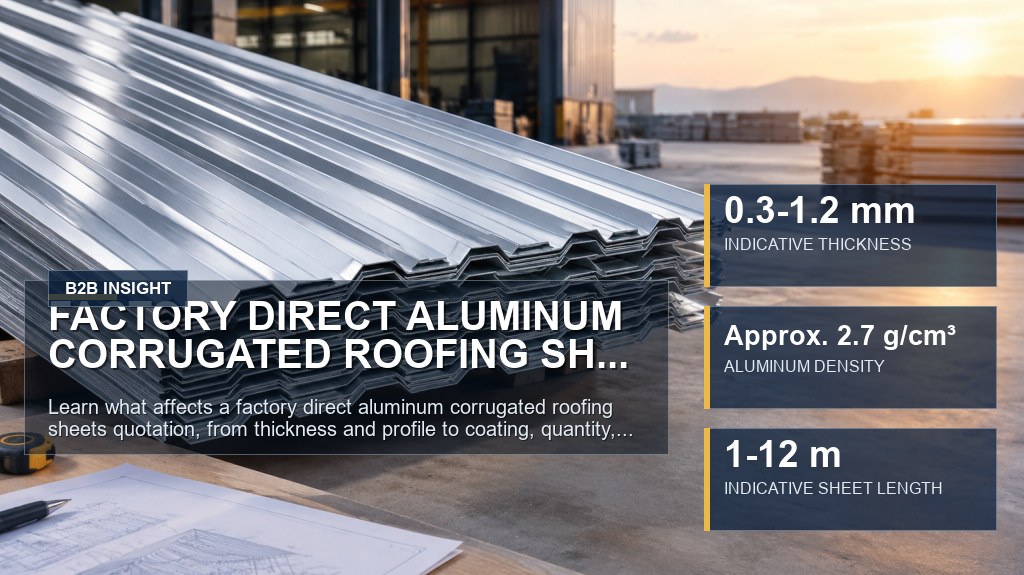
Thickness affects material usage, handling, rigidity, and cost. Corrugated aluminum roofing is commonly published in a broad indicative thickness range of about 0.3–1.2 mm, but available limits vary by profile and production line. Buyers should confirm whether the quoted figure refers to base-metal thickness, nominal finished thickness, or another measurement convention.
Profile geometry is equally important. The quotation request should include a drawing or sample reference showing cover width, overall width, pitch, corrugation depth, and lap arrangement. These factors determine compatibility with existing panels and influence the number of sheets required.
Surface options may include mill finish or color-coated material. For coated sheets, specify the coating system, color reference, required side or sides, gloss expectations, and intended environment. Supplier-specific coating thickness and warranty terms must be confirmed in the formal offer.
Application and Installation Considerations
For replacement roofs, matching the current profile is often the main challenge. A sheet with similar overall width may still have a different pitch or corrugation depth, preventing correct overlap. Clear profile drawings and photographs can reduce this risk.
For new construction, the roof design should coordinate panel length, support layout, drainage, flashings, ridge pieces, gutters, and fasteners. Longer sheets can reduce end laps, but they may change packing, container loading, handling, and freight costs. Thermal movement should also be considered in detailing and fastening.
In coastal, industrial, or chemically exposed settings, buyers should describe the service environment. This allows the supplier and project designer to assess whether the selected alloy, finish, fasteners, and accessories are suitable. Contact between dissimilar metals and poor drainage can affect long-term roof condition.
How to Request a Comparable Factory Quote
A concise request for quotation should include:
- Alloy and temper, or a request for a suitable recommendation
- Base-metal thickness and accepted tolerance
- Profile drawing with pitch, depth, and cover width
- Sheet length, required quantity, and permitted length tolerance
- Mill finish or coating requirements, including color reference
- Applicable inspection, testing, or documentation requirements
- Packing method, destination, trade term, and preferred shipment timing
- Required accessories such as ridge caps, flashings, or matching fasteners
Ask the factory to identify the quotation validity period, minimum order requirement, production basis, packing basis, estimated lead time, payment terms, and freight inclusion. Price comparisons should use the same unit, specification, quantity, trade term, and destination. Where offers use different cover widths, compare the installed coverage rather than only the price per sheet.
From Specification to Final Inquiry
A representative project buyer replacing a warehouse roof would first verify the existing corrugation profile, then provide measurements, photographs, finish requirements, and destination details. The decision would focus on profile compatibility, effective cover width, packing, and total delivered cost rather than the lowest headline sheet price.
Zhending Aluminum — a major aluminum products supplier from China. ZHENDING supplies aluminum insulated panels, modular sunroom systems, and outdoor building components for residential, commercial, and project applications, including the Color-Coated Steel Rock Wool / Polyurethane Sandwich Panel Series.
For a focused inquiry, send the roof profile, thickness, finish, dimensions, quantity, application environment, and delivery destination. A complete specification enables the supplier to issue a clearer factory quotation and identify any technical details that require confirmation before production.
Product Reference Indicators
| Metric | Value | Context |
|---|---|---|
| INDICATIVE THICKNESS | 0.3–1.2 mm | Commonly published broad market range; confirm the supplier-specific range for the selected profile. |
| ALUMINUM DENSITY | Approx. 2.7 g/cm³ | Commonly published general material-property reference. |
| INDICATIVE SHEET LENGTH | 1–12 m | Commonly published commercial range; confirm factory, packing, and transport limits. |
Where the source material provides no confirmed value, these figures illustrate product-selection dimensions and should be read with the applicable product datasheet.