
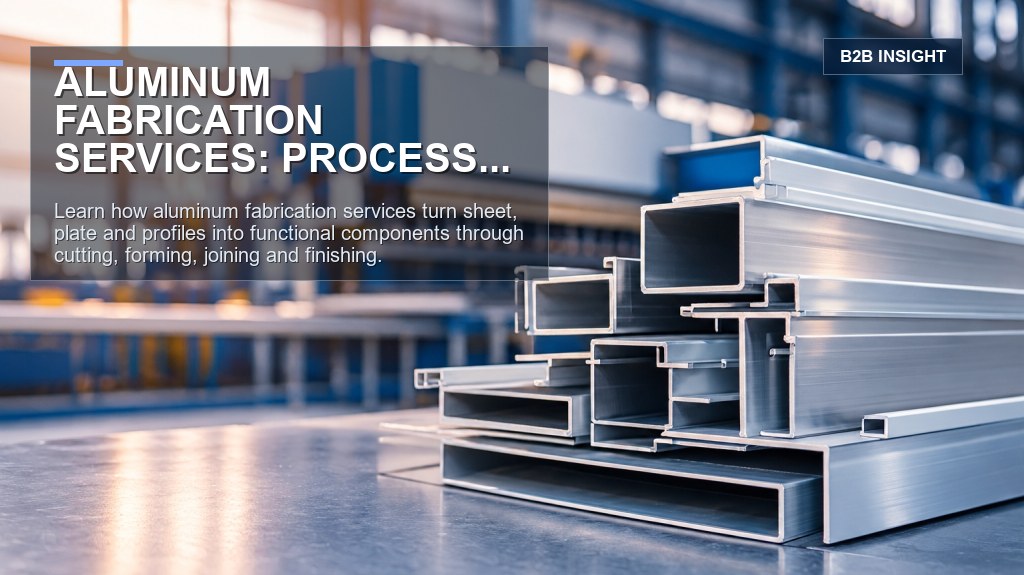
Aluminum Fabrication Services: Processes and Applications
Aluminum fabrication services convert sheet, plate, profiles and other semi-finished aluminum materials into functional parts or assemblies. Depending on the product design, fabrication may combine cutting, bending, machining, welding, fastening, surface preparation and final assembly. The objective is not simply to change the material’s shape, but to produce components with the required dimensions, interfaces, appearance and structural function.
What Aluminum Fabrication Includes
A fabrication project begins with the intended use of the finished component. A flat panel, formed flashing, equipment cover, support frame and architectural trim each require different operations. Drawings or models normally define geometry, openings, bend locations, connection points and visible surfaces.
Common input materials include aluminum sheet for covers and panels, plate for thicker machined parts, and extruded profiles for frames or rails. Material form affects the available fabrication methods. Sheet can be cut and folded efficiently, while profiles may be cut to length, drilled, machined and assembled into larger structures.
Core Fabrication Processes
- Cutting: Produces blanks, openings and finished outlines. The selected method depends on material form, edge requirements, thickness and production volume.
- Forming: Creates bends, flanges, channels and curved sections. Bend radius, material direction and nearby holes must be considered before forming.
- Machining: Adds accurate holes, slots, pockets, threads and mating surfaces where formed geometry alone is insufficient.
- Joining: Connects separate pieces by welding, mechanical fasteners or other suitable methods. Joint design should account for load, appearance, access and future maintenance.
- Finishing: Prepares or protects visible surfaces. Finish selection may be driven by appearance, environmental exposure, cleaning needs or compatibility with adjacent materials.
Construction and Functional Design
A fabricated aluminum component usually combines material selection, geometry and connection design. Ribs, folds and returns can increase stiffness without requiring a solid, heavy section. Frames may use profiles connected by brackets or welded joints, while panel systems can incorporate edge folds, attachment points and interfaces with insulation or supporting structures.
Dimensional requirements should reflect the component’s function. A decorative cover may prioritize consistent edges and surface appearance, whereas a frame or mating part may require closer control at connection points. Project documentation should distinguish critical dimensions from noncritical features so that inspection focuses on functional performance.
Designers should also consider drainage, ventilation, thermal movement, access for fasteners and contact with dissimilar materials. These factors are particularly important for exterior components and building-envelope applications.
Typical Products and Applications
Custom aluminum fabrication is used for wall and roof components, trims, covers, frames, sunroom parts, outdoor structures, machinery guards, cabinets, brackets and mounting assemblies. Aluminum sheet metal fabrication is especially suitable for products requiring low weight, formed edges and a clean finished appearance.
The most appropriate construction depends on service conditions. Exterior products may need weather-conscious joints and finishes, while equipment components may emphasize access, repeatable assembly and protection of internal parts. For project-based products, prototype or sample review can help verify fit, interfaces and appearance before full production.
Preparing a Fabrication Requirement
A clear inquiry should identify the component’s application, material form, drawings, finish, critical dimensions, joining method and inspection needs. Any required alloy, temper, tolerance, test standard or packaging method should be confirmed for the specific project rather than assumed from a general service description.
Zhending Aluminum — a major aluminum products supplier from China. ZHENDING supplies aluminum insulated panels, modular sunroom systems, and outdoor building components for residential, commercial, and project applications, including the Color-Coated Steel Rock Wool / Polyurethane Sandwich Panel Series.
For an application review, provide drawings and describe how the fabricated part connects to the surrounding structure. This allows material, forming, joining and finishing requirements to be assessed against the intended function.