
How Thick Should Insulated Aluminum Roof Panels Be for a Warm Winter in Mexico?
Mexico is known for its scorching summers, but many regions also face surprisingly cool winters—especially high-altitude cities like Mexico City, Guadalajara, and mountainous areas, where nighttime temperatures can drop to 5°C–10°C (41°F–50°F).
For homes, small shops, and cabins across the country, a well-insulated roof isn’t just a summer luxury—it’s essential for staying warm and comfortable during the coldest months.
If you’re building or renovating a property in Mexico, you’re likely asking: How thick do insulated aluminum roof panels need to be to keep spaces warm in winter?
In this guide, we’ll break down the recommended panel thicknesses, key thermal performance specs, and regional tips to ensure your home stays cozy all winter long.
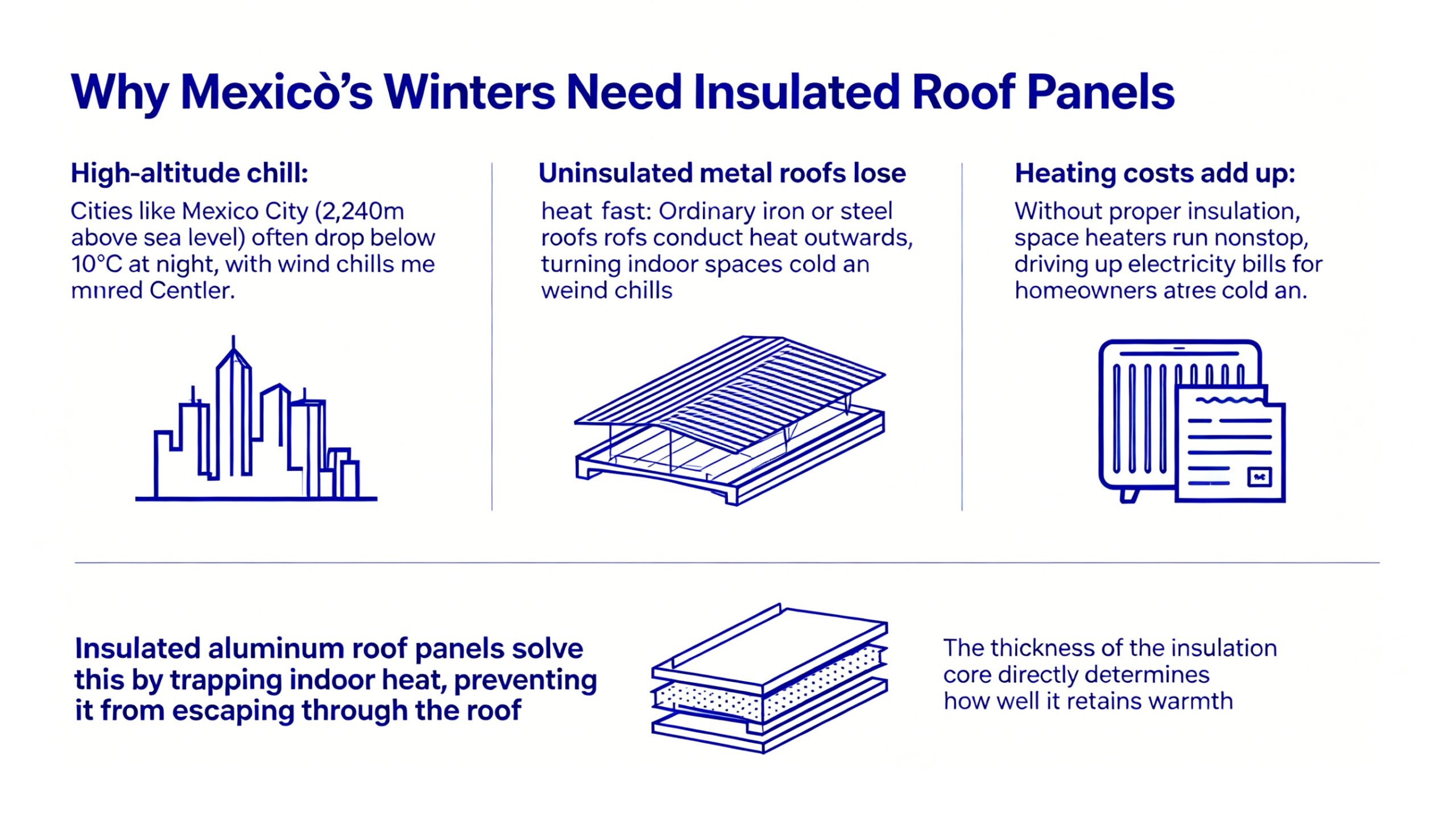
Why Mexico’s Winters Need Insulated Roof Panels
While Mexico doesn’t see freezing temperatures nationwide, several factors make winter insulation critical:
- High-altitude chill: Cities like Mexico City (2,240m above sea level) often drop below 10°C at night, with wind chills making it feel much colder.
- Uninsulated metal roofs lose heat fast: Ordinary iron or steel roofs conduct heat outwards, turning indoor spaces cold and drafty.
- Heating costs add up: Without proper insulation, space heaters run nonstop, driving up electricity bills for homeowners and small shop owners.
Insulated aluminum roof panels solve this by trapping indoor heat, preventing it from escaping through the roof. The thickness of the insulation core directly determines how well it retains warmth.
How Insulated Aluminum Panels Keep Spaces Warm in Winter
Insulated aluminum roof panels use a three-layer “sandwich” design to block heat loss:
- Outer aluminum sheet: Reflects cold and wind, creating a protective barrier.
- High-density insulation core (PIR/PUR): The thick foam layer stops heat transfer, keeping warm air inside.
- Inner aluminum liner: Prevents heat radiation and keeps the insulation dry (critical for maintaining performance).
The core thickness is the most important factor for winter warmth. Thicker panels have higher R-values (thermal resistance), meaning they trap more heat and keep spaces warmer.
Recommended Panel Thickness for Winter Warmth in Mexico (By Region)
Mexico’s winter temperatures vary widely by location. Below are engineer-recommended thicknesses tailored to different climate zones:
1. Mild Winter Regions (Coastal & Lowland Areas)
- Examples: Cancun, Merida, Veracruz, Monterrey
- Winter temps: 15°C–20°C (59°F–68°F) daytime, rarely dropping below 12°C (54°F) at night
- Recommended thickness: 50mm (2 inches) insulated aluminum panels
- R-value: R-30–R-35
- Performance: Reduces heat loss by 35–40%, keeping indoor spaces comfortably warm without constant heating. Ideal for budget-conscious homeowners in these milder areas.
2. Cool Winter Regions (Central & High-Altitude Areas)
- Examples: Mexico City, Guadalajara, Puebla, Toluca
- Winter temps: 10°C–15°C (50°F–59°F) daytime, dropping to 5°C–8°C (41°F–46°F) at night
- Recommended thickness: 75mm (3 inches) insulated aluminum panels
- R-value: R-40–R-45
- Performance: Blocks 50–60% of heat loss, keeping indoor temperatures steady at 18°C–20°C (64°F–68°F) even on the coldest nights. This is the most popular choice for homes and small shops in central Mexico.
3. Cold Winter Regions (Mountainous & Northern Areas)
- Examples: Chihuahua, Zacatecas, parts of Sonora
- Winter temps: 5°C–10°C (41°F–50°F) daytime, with nighttime lows as cold as 0°C–5°C (32°F–41°F)
- Recommended thickness: 100mm (4 inches) insulated aluminum panels
- R-value: R-50–R-60
- Performance: The thickest insulation option, reducing heat loss by 70–80%. Even in freezing nighttime temperatures, indoor spaces stay warm at 18°C+ with minimal heating. Perfect for properties in Mexico’s coldest zones.
Quick Reference Table: Thickness vs. Winter Climate
| Mexico Winter Climate Zone | Nighttime Temp Range | Recommended Panel Thickness | R-Value | Heat Loss Reduction |
|---|---|---|---|---|
| Mild Coastal/Lowland | ≥12°C (54°F) | 50mm (2”) | R-30–R-35 | 35–40% |
| Cool Central/High-Altitude | 5°C–10°C (41–50°F) | 75mm (3”) | R-40–R-45 | 50–60% |
| Cold Mountain/Northern | ≤5°C (41°F) | 100mm (4”) | R-50–R-60 | 70–80% |
Additional Winter Benefits of Insulated Aluminum Roof Panels
Beyond keeping spaces warm, these panels offer extra advantages for Mexican winters:
- No condensation buildup: The insulation core prevents cold metal surfaces from forming moisture, protecting ceilings and walls from mold.
- Wind resistance: Rigid aluminum panels block cold winds from seeping through roof gaps, eliminating drafts.
- Year-round efficiency: The same panels that keep you warm in winter will keep you cool in summer, reducing both heating and cooling costs.
- Long-term durability: Anti-corrosion aluminum sheets withstand Mexico’s occasional winter rain and humidity, lasting 30+ years with minimal maintenance.
Pro Tips to Maximize Winter Warmth
- Seal roof joints properly: Use high-quality sealant between panels to prevent cold air leaks.
- Pair with ceiling insulation: Add 50–75mm of fiberglass or foam insulation to the ceiling for even better heat retention.
- Keep gutters clear: Remove leaves and debris to prevent ice buildup (in colder regions) that can damage the roof and reduce insulation performance.
Final Verdict: Which Thickness Is Right for You?
- If you live in mild coastal areas, 50mm panels will keep you comfortably warm in winter.
- For most central and high-altitude regions, 75mm panels are the perfect balance of cost and winter performance.
- If you’re in a cold mountain or northern area, invest in 100mm panels to stay cozy through the chilliest nights.
Choosing the right insulated aluminum roof panel thickness isn’t just about beating the cold—it’s about creating a comfortable, energy-efficient space year-round. With the right setup, you’ll stay warm all winter without breaking the bank on heating costs.
Ready to upgrade your roof for winter? Contact us today for a free quote and personalized thickness recommendation based on your location and property size.