
Which Factories in Mexico Should Use Insulated Aluminum Roof Panels?
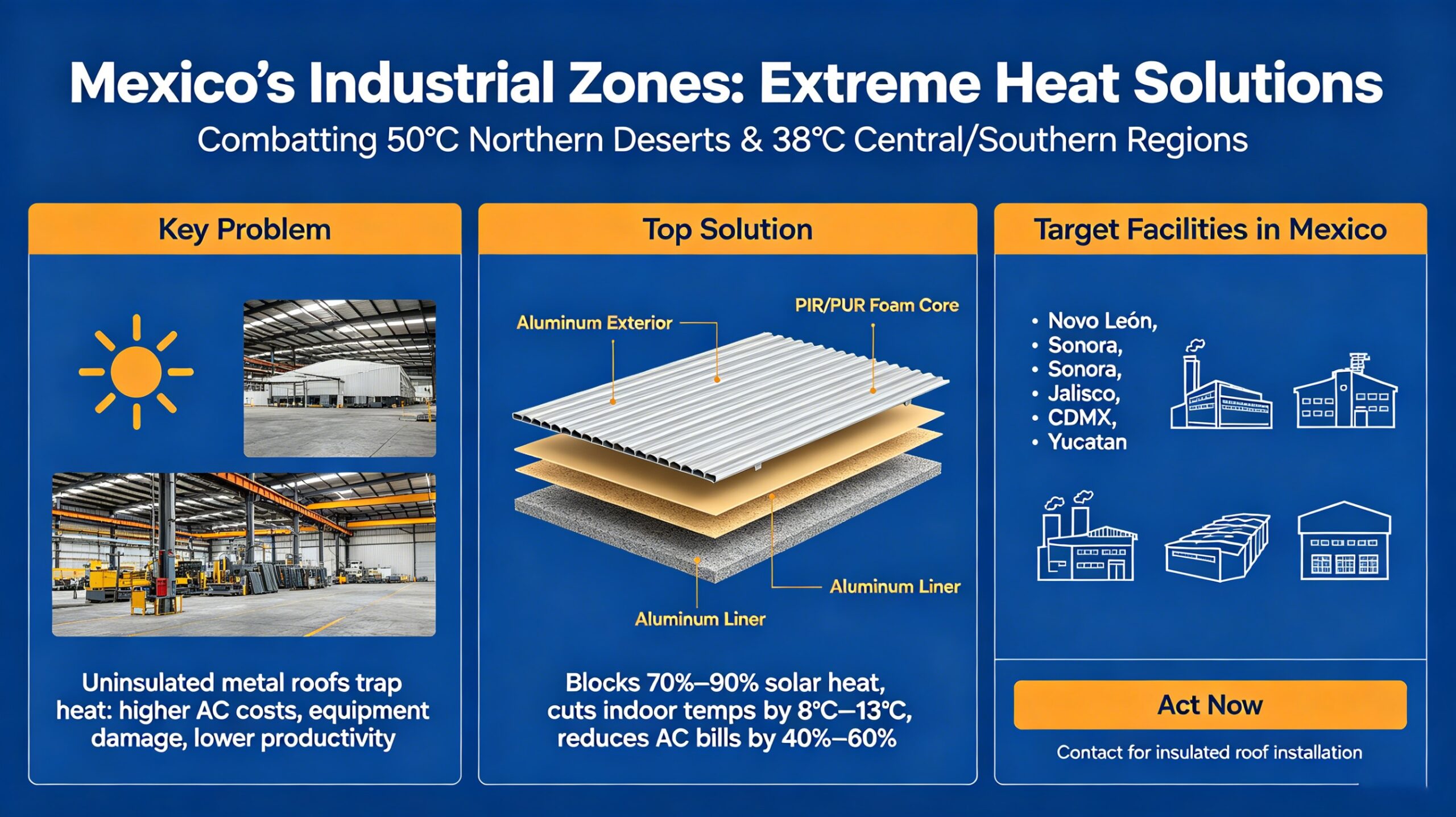
Mexico’s industrial zones face extreme summer heat—up to 50°C in northern deserts and 38°C in central/southern regions. For factories, uninsulated metal roofs turn facilities into heat traps, raising AC costs, damaging equipment, and lowering worker productivity.
Insulated aluminum roof panels (3-layer: aluminum exterior + PIR/PUR foam core + aluminum liner) are the top solution. They block 70%–90% of solar heat, cut indoor temps by 8°C–13°C, and reduce AC bills by 40%–60%.
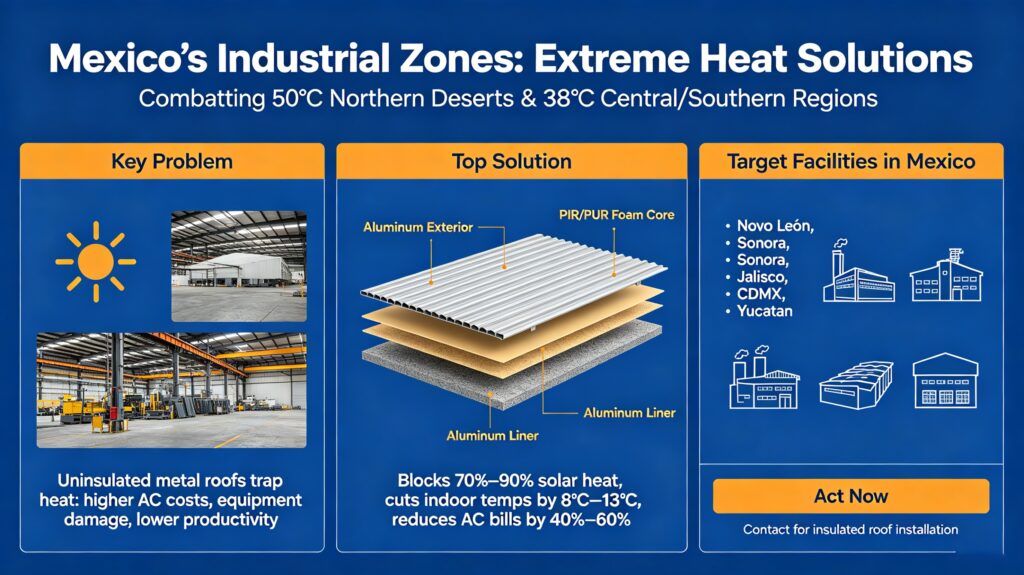
If you own or manage a factory in Mexico (Nuevo León, Sonora, Jalisco, CDMX, Yucatan), here’s which facilities should switch to insulated aluminum roofs:
1. Manufacturing Factories (All Sizes)
Best for: Automotive, electronics, textiles, machinery, furniture, and general manufacturing plants.
- Why: Mexico’s manufacturing belt (Monterrey, Guadalajara) sees 35°C–40°C summers. Uninsulated steel roofs hit 70°C+, overheating production floors and sensitive electronics.
- Benefits:
- Protects machinery from heat damage (reduces breakdowns by 30%).
- Improves worker comfort (temp drops to 24°C–26°C).
- Lightweight (3–5 kg/m²) – no extra structural support needed.
2. Logistics & Warehousing Facilities
Best for: Large warehouses, distribution centers, storage yards, and cold storage facilities.
- Why: Mexico’s e-commerce boom (Mexico City, Cancun, Tijuana) means massive warehouses with no natural shade. Traditional metal roofs make stored goods (food, electronics, furniture) spoil or warp.
- Benefits:
- Maintains stable temps (prevents inventory damage).
- Reduces condensation (no mold/rust on stored items).
- Fast installation (500m²+ daily) – minimizes downtime.
3. Food & Beverage Processing Plants
Best for: Meat packing, dairy, fruit/vegetable processing, bakeries, and beverage bottling plants.
- Why: These facilities need strict temperature control (20°C–25°C) for food safety. Mexico’s heatwaves force AC systems to run 24/7, driving huge energy costs.
- Benefits:
- Consistent indoor temps (meets health regulations).
- Resists corrosion from humidity/steam (30–50 year lifespan).
- Cuts AC costs by 50%–60% – critical for profit margins.
4. Chemical & Pharmaceutical Factories
Best for: Chemical production, pharmaceutical labs, and fertilizer plants.
- Why: Many chemicals/pharmaceuticals are heat-sensitive (degrade at >30°C). Northern Mexico’s 45°C+ heatwaves risk product loss and safety hazards.
- Benefits:
- Superior thermal stability (PIR core resists 75°C+).
- Corrosion-resistant aluminum (withstands chemical fumes).
- Fire-retardant core (meets strict safety codes).
5. Automotive & Parts Manufacturing
Best for: Car assembly plants, auto parts factories, and metal fabrication shops.
- Why: Mexico is a top auto manufacturing hub (Nuevo León, Coahuila). Welding/painting areas generate extra heat, making facilities unbearable in summer.
- Benefits:
- Reduces overall heat load (combo of solar + industrial heat).
- Durable against metal dust/sparks (no fire risk).
- Lightweight – ideal for large-span assembly bays.
6. Textile & Apparel Factories
Best for: Clothing, fabric, and textile mills (especially in Puebla, Jalisco).
- Why: Textile production requires cool, dry air to prevent fabric shrinkage/damage. High humidity + heat ruins materials and slows production.
- Benefits:
- Balances temp/humidity (protects fabrics).
- Noise reduction (blocks rain/industrial noise) – improves worker focus.
7. Agricultural & Processing Facilities
Best for: Grain silos, livestock barns, and agro-processing plants (Yucatan, Sonora).
- Why: Northern Mexico’s desert heat and southern humidity damage crops/livestock. Uninsulated roofs make silos reach 60°C, spoiling grain.
- Benefits:
- Keeps grain/livestock cool (reduces waste).
- Waterproof seams (prevents rain leaks in rainy season.
8. Small & Medium Factories (40m²–500m²)
Best for: All small industrial units (workshops, repair shops, small production lines).
- Why: Small factories have no budget for heavy AC. Insulated aluminum roofs are affordable and easy to install.
- Benefits:
- Cuts cooling costs by 40% – perfect for tight budgets.
- DIY-friendly installation (2 workers for 40m²).
Why These Factories Choose Insulated Aluminum Roof
| Factory Type | Key Pain Point | How Insulated Aluminum Solves It |
|---|---|---|
| Manufacturing | Extreme heat + equipment damage | 8°C–13°C temp drop + heat protection |
| Logistics | Inventory spoilage + high AC bills | Stable temps + 50% energy savings |
| Food Processing | Food safety risks + humidity | Precise temp control + corrosion resistance |
| Chemical | Heat-sensitive products + corrosion | PIR core stability + aluminum protection |
| Automotive | Extra industrial heat + large bays | Lightweight + heat load reduction |
Final Verdict
Nearly all factories in Mexico can benefit from insulated aluminum roofs—especially those in hot regions (Sonora, Nuevo León, Yucatan) and facilities needing temperature control (food, pharma, electronics).
If your factory struggles with sky-high AC bills, heat-damaged goods, or uncomfortable workers, insulated aluminum panels are the best long-term investment (ROI in 2–3 years).
Ready to upgrade? Contact a local Mexican supplier (Monterrey, Guadalajara, CDMX) for a free quote and site assessment.